China is the cradle of tea, where the discovery and use of tea by the Chinese people is said to have begun in the era of Shennong, over 4,700 years ago. To this day, the Han people still maintain the custom of offering tea instead of gifts.
Chaozhou Gongfu Tea, as a classical school of Chinese tea culture, embodies the essence of China’s tea traditions and has been recognized as a representative of Chinese tea ceremony, included in the national intangible cultural heritage list. In 2022, traditional Chinese tea processing techniques and related customs were inscribed on UNESCO’s Representative List of the Intangible Cultural Heritage of Humanity. Drinking tea was extremely common in ancient encompassing not only material aspects but also deep spiritual and cultural dimensions. Lu Yu, the “Sage of Tea” from the Tang Dynasty, sounded the call for Chinese tea culture through his classic work The Classic of Tea. Since then, the spirit of tea has permeated royal courts and society at large, deeply influencing Chinese poetry, painting, calligraphy, religion, and medicine. For thousands of years, China has accumulated abundant material culture related to tea cultivation and production, as well as rich spiritual and cultural heritage—this is the unique tea culture of China.
The cultural significance of tea is deeply rooted in China’s five-thousand-year history of civilization. In ancient times, with the rise of tea drinking among literati, poems and songs about tea gradually emerged, and tea transcended its status as a mere food to enter the cultural sphere, playing a certain spiritual and social role. During the Wei, Jin, and Northern and Southern Dynasties, the world was in turmoil, and various cultural ideas clashed and merged, with metaphysics becoming quite popular. Metaphysics was a philosophical trend during the Wei and Jin periods, mainly combining Lao-Zhuang thought with Confucian classics. Metaphysicians were mostly so-called “famous scholars,” valuing lineage, appearance, and demeanor, and enjoying abstract and profound discussions. During the Eastern Jin and Southern Dynasties, the wealth of the lower reaches of Yangtze river provided temporary satisfaction for scholars, who spent their days lingering among the beautiful mountains and rivers, and the trend of simple living continued to develop, leading to the emergence of many “pure talkers.” Initially, many pure talkers were heavy drinkers, but later, the trend of pure talk gradually spread to ordinary literati. Metaphysicians enjoyed lecturing, and ordinary pure talkers also enjoyed lofty discussions. Alcohol can excite, but excessive drinking leads to erratic behavior, incoherent speech, and a lack of refinement. Tea, however, can be enjoyed throughout the day without loss of clarity, promoting mental sharpness and a peaceful state of mind. Moreover, for most scholars, spending all day with wine and meat was not economically feasible. Thus, many metaphysicians and intellectuals turned to tea. For them, tea drinking had become a spiritual phenomenon. With the introduction of Buddhism and the rise of Taoism, tea drinking became associated with these religions. In Taoism, tea was seen as a way to refine the “inner elixir,” clearing away impurities, lightening the body, and cultivating longevity; In Buddhism, tea was essential for meditation and achieving tranquility. Although a complete religious tea-drinking ritual and explanation of the philosophical principles of tea had not yet formed at this time, tea had already transcended its physical form as food and drink, possessing significant social and cultural functions, and the early signs of Chinese tea culture were emerging.
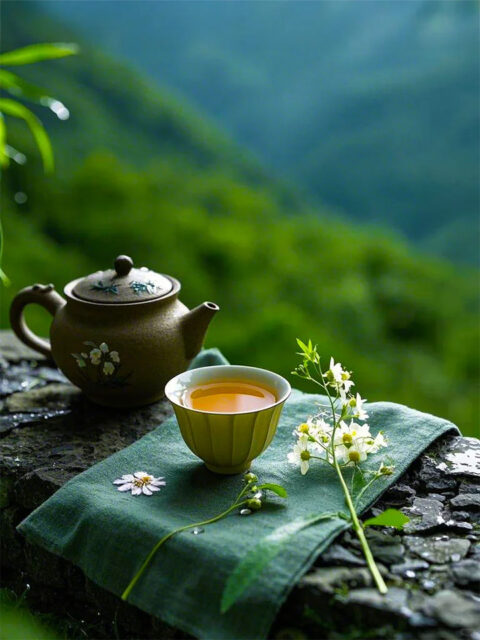
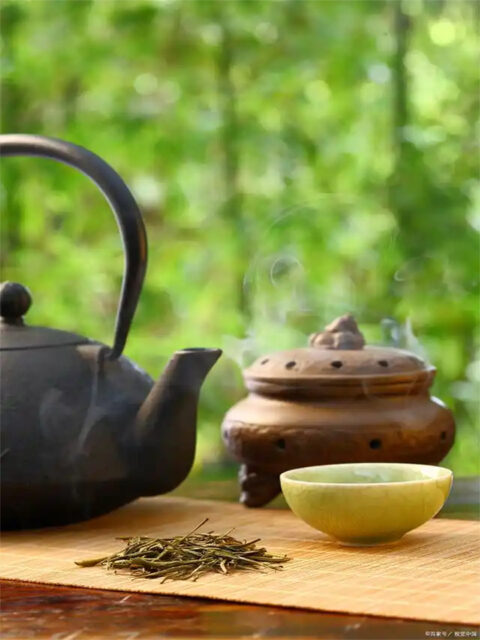
The medicinal value of tea became increasingly prominent. Tea has medicinal effects for health and disease treatment, and it also offers aesthetic pleasure, cultivating character. Tea tasting and entertaining guests are elegant forms of entertainment and social activity for the Chinese. Sitting in teahouses and attending tea parties are traditional Chinese social group tea-related activities. Brewing tea with boiled water, following nature’s rhythm, and enjoying it with refined elegance, seeking the inherent flavor of the tea and emphasizing the overall atmosphere—this is the characteristic of Chinese tea tasting. Even with the same quality tea leaves, different water, teaware, or brewing techniques will produce different tea infusions. China has always placed great importance on tea brewing, accumulating rich experience. To brew good tea, one must understand the characteristics of different types of tea and master scientific brewing techniques to fully express the inherent qualities of the tea.